[Infographic] How People Really Use Mobile

I think what I like best about this interactive infographic at the Harvard Business Review is that it invalidates the approach many have taken towards mobile and validates an approach that is more measured towards what’s actually happening. Decide for yourself (click thru for the interaction):

How People Reall Use Mobile Infographic via Harvard Business Review blog

Mobile Stats for EoY 2012

Mobile Stats for EoY 2012
Global
Population Subs Pen. Rate Uniques New Subs Dead/Not-Active
7.1B 6.7B 94% 4.3B 700M ???
Devices
Handsets Feature Phones Smartphones New Devices Second-Hand SIM-Only
5.3B 4B 1.3B ??? ??? 1.4B
Communications
SMS MMS Premium SMS Voice Social Net. VoIP
5.6B 2.9B 1.9B 5.4B 1.1B ???
Features
3G WiFi Camera Browser/WAP Browser/HTML GPS
1.3B 1.1B 4.8B 2.1B 1.5B ???
Apps & Services
News Apps Gamers Search Ringback Tones Ad Audience
2.3B 1.2B 1.2B 1.3B 1.0B 4.0B
Other Tech
Tablets PCs TVs Newspaper Digital Cameras Port. Gaming Devices
??? 1.6B 2B 430M 300M 250M
Source: Tomi Ahonen Almanac 2013 and Communities Dominate Brands
Shaded blocks are added columns by Antoine RJ Wright, which may not be answered in source data or other readily attainable sources.

Apologies for how tight this is if you are viewing this in a browser on the site; the template didn’t take to this table so nicely on all the pages. Click here to just view the table.

Flurry’s Smartphone vs Tablet Perspectives

We are always careful here to post about stats looking at usages of smartphones vs tablets. Part of this is because of the entry point for much that information that can sometimes be skewed by access (for example, if you are a web service, then your stats only include those subscribing to your web service, not those who don’t subscribe to yours, or to one at all). That said, there’s always something to be gained from these notes, and Flurry’s latest leaves us a few things to consider.

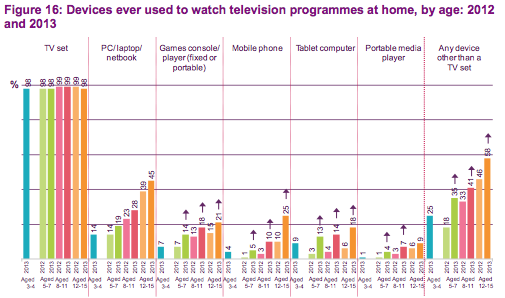
Flurry Smartpones vs Tablets AgeBreaks resized 600

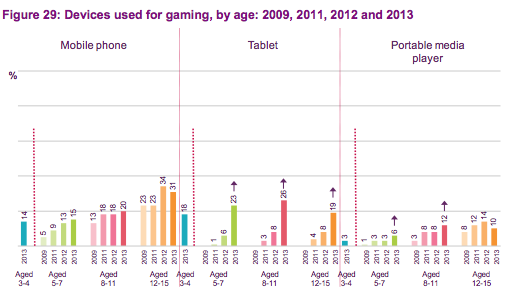
Flurry Smartpones vs Tablets Dayparting resized 600

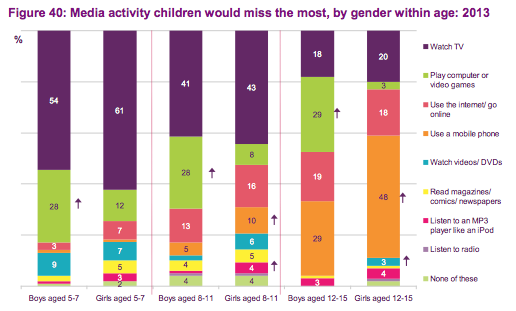
Flurry Smartpones vs Tablets CategoryUsage resized 600

That’s all for the pictures, visit Flurry’s post, The Truth About Cats and Dogs: Smartphone vs Tablet Usage Differences on their blog.

Unique Numbers, Unique Possibilities

Useful assessment (Source: gsma.com) - click for full image

The image on this post comes via Horace Dediu (‏@asymco) via Twitter/TwitPic. It speaks to both the unique numbers that have characterized mobile for sometime in terms of its relationship of subscribers to the global population and to what’s addressable within those constraints.

In a previous post, we threw some numbers against the wall to explain in a similar fashion that while mobile is indeed an opportunity, what it can address directly isn’t limitless. Look at that graphic – as of 2012, the GSMA is saying that of the 4.7 billion people who could be addressable with mobile, 1.5 million (a tick less than 33%) of them are not connected due to network coverage issues. That’s a pretty large pocket of folks that you can’t rely on to download your app, receive your SMS/MMS, or scan your QR code/AR dimensional plane. For mobile to have effectiveness there, you’ve got to think more off the grid, and more to the point if mobile is the most relevant delivery or translation mechanism (for example, what we saw with AirStash on an airplane).

When you do adjust for that, then the possibilities of using mobile become unique enough that it seems as if it truly will reach the ends of the earth.

[Resource] @TomiAhonen Phone Book 2012

Tomi Ahonen Phone Book 2012 coverEarlier this week, Tomi Ahonen announced the 2012 version of his comprehensive Phone Book Almanac. The Phone Book is a compliation of stats, fugures, and forecasts of the mobile industry and is wel regarded as one of the better public sources for this kind of content (you can find it elsewhere, but its in a lot of places or behind paywalls).

On the day Phone Book 2012 was announced, Ahonen took to Twitter (@TomiAhonen) and asked his followers to ask him one question of any stat that appears within the almanac. Here are a few that he tweeted:

  • what is total number of sales of pure-touchscreen phones world wide – answer on page 53: 650M this year
  • what is average percentage smartphone penetration in Middle East region? – answer on page 76: 45% migration
  • I don’t have it broken down smartphone/dumbphone, but for all phones its on page 60, average replacement cycle now 21 months
  • The Phone Book does tell us on page 99 that for the Advanced APAC region (includes Japan) most popular OS is Android
  • what is average LatAm smartphone price – answer on page 36, is 276 US dollars
  • whats the number of android handests in latam – answer on page 100: Android 35% of all smartphones LatAm
  • page 159 tells us that Spanish mobile penetration rate currently is 122%
  • what is global rate of 2nd-hand handsets in use – answer on page 42: 12% of all phones second hand

To purchase Phone Book 2012, visit the ebook’s website and follow the instructions.

Pinterest-able Content

Analytics and metrics can sometimes be fun, and other times discouraging. Earlier this year, MMM went through this marvelous period where readership via website, mobile, and RSS just continued to pick up. It was amazing to see for a number of months, and really helped drive a lot of the content that was being generated here. And then just it flattened out a bit. Not sure what all was the reason, but we kind of got to a plateau and it was just kind of… blah. It seems like we are back on the upswing now, and it seems to be happening from different sources. One of the latest of these streams is Pinterest.

Pinterest is a social network that’s based on the cork-board-and-picture idea. You see something online that you like and then you pin it to your board to share with people who might have similar likes. Tag those items and other people can see what you’ve pinned.

What I saw the other day is that there’s a set of pins out there for items posted from MMM. There aren’t many items, but that did get me to thinking about creating a few more media assets, and making it a bit easier to link to others done previously, so that those looking at this intersection of faith and tech, but coming visually, can have a bit of something to work… er pin with.

So, with that now said, and if you are visiting from Pinterest, what kinds of graphics from MMM would you like to see so that you can pin?

Sidenote: we do publish sketchnotes from various presentations/conferences (for example, here are a few from the latest ICCM USA Conference Sketchnotes Mobile Apps BOF,Spiritual Reboot KeynoteIntro Sketches), these would be suitable for pins.

CoM (Carnival of the Mobilists)

Just about every week, there is a collage of mobile writings called the Carnival of the Mobilists (CoM) which features some non-mainstream but not far from the norm writings. In the latest Carnival at Tego Interactive (@tegointeractive), MMM’s piece Communting != Mobility is included along with a few others that should get you thinking and considering a bit more the implications of your mobile ministry efforts.

Per the usual instructions, grab a cup of coffee or tea and a nice place to read and take in the 279th Carnival of the Mobilists at Tego Interactive.

If you have writings that should be considered by a future host of the CoM, do follow the instructions at the CoM website. If you read someone who should have something included, poke them with a note that you’d like to see their writings featured and give them the link as well. If anything, that will at least spead some of the goodwill and insight that others so frequently find in this space.

Tweets from Monday

Here are the tweets from Monday:

Yep, lots of retweets. Perhaps today might find a bit more nuggets in here. Never know what the day’s social streams offer ;)

Mobile Ministry Discussion Question

As you might have seen via Twitter and a few former postings, Cybermissions has begun the next Mobile Minsitry Training Course, and for the first week, I’m the guest presenter/faciltator. One of the questions that started off the discussion I thought was quite appropriate and so I’m posting both the question and my answer here to continue the discussion in a wider frame:

What really zings you about Mobile Ministry – the numbers, the opportunity, the ideas, the technology?

And here’s the answer as posted to the thread (w/addition of links or emphasis here)

I find that numbers are one of the more interesting parts of the discussion. Mainly because while we are very often in the mindset that the entire world (all 7 billion or so of us) is a candidate for evangelism, that we don’t usually pay as much attention to the numbers of people who are already hearing the message, who heard and rejected the message, or who are out of range of any [computer-aided] technological opportunity for the message of the Gospel. And if that sounds like I’m saying that not everyone can be reached with the Gospel via mobile, that’s pretty much it. The numbers don’t line up with the zealousness of the activity.

The numbers (for mobile ministry) do line up with the ability to fix some broken walls between classes/cultures as it relates to the Faith. The numbers do line up with the economic opportunity to improve situations for those using the devices (and by counterpoint, undermine the economic opportunity for those on the side of making the devices and pulling the materials needed for those devices). As it stands with current activity, mobile ministry is only addressing the side of people exposed to a literal message of the Gospel, its not addressing the lifestyle of those folks who should be influenced by a Holy Sprit-infused perspective.

If we look at it by the numbers, then the direct opportunity for mobile ministry gets clouded:
- global population of 7 billion
- global population of ~4 billion with exposure to some cellular mobile device/service
- global population of ~2.5 billion whom are some iteration of a professed Christian

If we take the first two (global population and all those w/some mobile exposure) as a proportion (2/3 of the world connected mobile) and do so in isolation (that is, we aren’t counting the other media channels like radio, TV, Internet; nor are we accounting for a global illiteracy rate of 60%), the we can take that 2.5 billion and ask a simple question:

Are 800 million people enough to spread the Gospel via mobile technology? Or, are 800 million people preaching a Gospel to themselves, missing the ears other 6.2 billion?

That’s where my answer to the question ends. What’s your input on this (I’ll point the class here to also view perspectives as well).

And just think, this is the first week of the Mobile Minsitry Training Course. There are three weeks left, and the conversations get a lot more intense than this. You should consider signing up the next time this class comes around.

Can Data Expose the Depths of Mobile/Digital Faith Efforts?

screenshot of email image from YouVersion showing Top 10 Bookmarked verses from their service

About a week ago, I received an email from YouVersion noting the top 10 bookmarked verses within their application. This is quite valuable information, especially if you are apt to advise people to use their digital tools in order to engage the Scriptures. Now, the fun comes in taking this kind of information and trying to make some sense of it. Upon receiving this, I tweeted an honest and business intelligence -like question:

Top 10 bookmarked verses in @youversion; the needs of digital believers can be summarized in these perhaps?

Why these verses? What about these verses speaks to the needs, or at the very least the attention spans mentally, spiritually, and socially to believers? Does this point to how mobile has fostered spiritual transformations (transformations)? Let’s see.

(1, 5, 6) Philippians 4:6-7, 13

Do not be anxious about anything. Instead, in every situation, through prayer and petition with thanksgiving, tell your requests to God. And the peace of God that surpasses all understanding will guard your hearts and minds in Christ Jesus… I am able to do all things through the one who strengthens me.

Anxiousness tempered with prayer and thanksgiving. Not exactly the instant nature of mobile. One could argue that this is intentional friction to life if considered on this frame.

(2, 7) Proverbs 3:5-6

Trust in the Lord with all your heart, and do not rely on your own understanding. Acknowledge him in all your ways, and he will make your paths straight.

Having moved to prepaid instead of post-paid, I am seeing my trust stretched (amazing what a buffer missing doesn’t do in terms of keeping you off track).

(3) Jeremiah 29:11

‘…For I know what I have planned for you.’ says the Lord. ‘I have plans to prosper you, not to harm you. I have plans to give you a future filled with hope.’

Do we know what Facebook, Amazon, Apple, etc. have planned for our uses of their devices and services? Probably not. But we do have a sense of God’s leaning towards us.

(4) Romans 12:2

Do not be confirmed to this present world, but be transformed by the renewing of your mind, so that you may test and approve what’s the will of God – what is good, and well-pleasing, and perfect.

Well, it might be a bit late for this. There are more people who use mobiles (+4 billion) than who are Christians (~2.5 billion). What isn’t too late to happen though is a pattern of behavior that is distinct in it’s goodness, appeal, and viscosity while mobile and connected. I would argue that this verse isn’t taught in this way (again, a mobile filter here). But, if it were, what would Christ-thru-mobile look like?

(8) Romans 8:28

And we know that all things work together for good for those who love God, who are called according to his purpose.

This is not something people feel when their favorite platforms and devices are no longer supported. But, again, it is a state of mind and affairs of the believer. Accessing this verse on a mobile is probably in context of knowing that some moment isn’t, but that the word (and device) is timely in its encouragement.

(9) Matthew 6:33

But above all pursue his kingdom and righteousness, and all these things will be given unto you as well.

The structure of this verse lends itself to having to read all of the context before it. It’s not that you get anything, but only those things that are necessary for life and godliness. I hope it’s taken in that context by those bookmarking it, because if you are leaning on this to get that next mobile, you might be following the leanings of the wrong god.

(10) 1 Corinthians 13:4

Love is patient, love is kind, it is not envious. Love does not brag, it is not puffed up.

Man. This is the kind of verse that makes all of those customized cases, skins, themes, and ringtones feel a bit worse for wear doesn’t it? Does our use of mobile demonstrate the kind of love being detailed in this section of Scripture? Or, is this marketer a reminder for the kind of love that needs to resonate through each service and application on these devices we use?

Interpreting the Data We Can See
Can the life of the digital believer on YouVersion be identified as Christ-following if we use just this snapshot? Clearly they walk through some of the more accessible passages in the text. There is also some kind of leaning towards the spiritual, emotional, and psychological health of the reader. We don’t know how often these are referenced, nor how often they are bookmarked.

To the the dismay of some, there isn’t one evangelical verse in here. To some, there is an almost hotel bible approach (NT, Psalms, and Proverbs) – so where are the minor prophets or even the Pentatuch?

If you teach the word, do you lean on these and other popular Scriptures as memory devices for the hope and help of the believers you are serving? Or, has this simple statistic from one of many applications that have been used on mobile devices shown the lack of a solid, secure, instructional view of the entire Bible (66 or 80 books)?

What Other Data Is There Worth Mining for Value
It is very true that just collecting and trying to interpret data for the sake of doing so is a fool’s errand. There’s a lot of knowlledge that can be gained, but very little understanding if it has no context. Something that I wondered in looking just at this snippet of data that YouVersion shared was what other kinds of information could they offer? For example, if there’s a top bookmarked verses, there’s also a least (where least is greater than 0 or null). There’s some kind of data wrapped around frequency of verses during times of the year? And possibly there is some regional variation towards which parts of the Scriptures are more tuned in towards than others. In a very simple sense of things, YouVersion and other similar service providers, sit on a bounty of information that’s just waiting for the right questions to be asked of it.

Would YouVersion, Logos, Accordance, Olive Tree, and others be open to these kinds of questions towards how people are using their applications? Shoot, it would just be interesting to compare the top bookmarked verses in each of these service-app platforms just to see how they are used differently. Would pastors/teachers be apt to know how to ask for this information (“hey, I know that these people following me in your app-service attend my church, is there any way to get a custom report towards how we all do in terms of general reading and searching data?” is the kind of question that I’m leaning towards. For those who use the group settings, this kind of information can be a boon.

What if we find out something that turns us off? Like people don’t read their Bibles but once a month in these apps. That many people are more apt to remember the app when their devices say to update, rather when they are admonished by their community to meditate on a specific passage (Joshua 1:8)? What could we do with the information then? Does mobile expose digital faith as helpful, a hindrance, or as just another Hebron between us and God?