Monthly Archives: November 2010

MMM Sitting on CPCC GeekFest Panel

Today, I’ll be in Charlotte speaking on a panel at Central Piedmont Community College’s GeekFest. The panel is titled Diverse STEM Professionals: Identifying Barriers and Sharing Strategies for Success.

Here’s the description of what to expect:

Companies understand the value of diversity in fields where tasks require innovation; however, recent studies show a significant decrease in the number of women, persons with disabilities, and under-represented minorities in STEM professions. This session is an opportunity for CPCC students to participate in a guided, informal panel discussion with area STEM professionals who come from traditionally underrepresented populations.

Panelists will discuss topics such as how they have broken barriers to advancement, the role of collaboration in career success, the importance of a desire to learn, taking appropriate risks, and how to balance work & family life. In this session, these professionals will also share exciting details about how a career in STEM gives you an opportunity to work daily on the forefront of innovation.

This panel will be taking place in room LV1302 at Central Piedmont Community College’s Levine Campus in Matthews NC (map).

The GeekFest will actually be going on the entire day. Visit their website for details about the other panels and events that are going on today. You can also follow the hashtag #GeekFest on Twitter/FB to check out the happenings and back-chat that will be going on throughout the day.

These aren’t the only events that you’ll see MMM a part of. If you’ve got an idea for an event, or would like to engage in training/consulting via MMM, take a look at our calendar* and pitch us an idea.

*Due to the nature of some projects, not every event MMM engages in will be exposed on this calendar. Items on this calendar that can be exposed are and are cleared with attending parties.

Does Publishing Change or Do We

Composed in Evernote, this is a doc that I’ve been working on for a week or so. Hope it comes out nice.

Am sitting is a car at the moment talking about the kiosk project and some of the issues that relate to how the bible publishing industry can move forward. We know for certain that publishing the way that is has been going for the last 50-100 years isn’t going to continue in the face of advancements made digitally. From content distribution to monetization, there are questions to be addressed and none of them will endear easy answers.

Ownership and Access

The common perception of ownership is that of sovereignty and domain. When you purchase a product, you take responsibility of it’s upkeep and any additional service to fix or improve the initially purchased product is done for an additional fee.

Access is the ability to get to content, but not necessarily the ability to change or maintain it. Access usually has additional rules around it such as copying, sharing, and forwarded distribution. In some cases, access might be tied to another service agreement which allows for updates to the content (product) and some kinds of maintenance.

To be blunt, there has never been a model of publishing where we have owned the Bible. Access is granted through agreements we enter into with publishing houses. Distributors may also have a slice of this access pie, but it all ends up in the same equation – you don’t own your biblical material, you are granted access.

Access and Publishing

With that said, the publishing industry would seem to have an excellent heads-up on some of the upcoming trends in this information economy. They have the intent, the content, and the understanding of the marketplace to continue with this model for some time longer. Truly, there are many persons who don’t have access to the Bible or it’s associated materials who would prove to be solid markets for publishing houses to pursue.

Yet, as I look at the world around me, the question about information isn’t ownership, it is access. If I have the access to the source, when I need it, does it make sense to continue to purchase access in silos (books, applications, audio formats)?

The kiosk proposes that someone only needs to know where a central content distribution area is. The internet proposes that you only need to know the website, or at the very least be connected to a person who does have the access and will share it (that link) with you. To a publisher, how does their model of selling success make sense in the light of such changes in the receiving method?

Publishing’s Opportunity to Change

There have been a lot of calls for publishing to change. We’ve gotten into the fray here with our series item The Future of (Biblical) Publishing. And it is true to an extent that publishers are facing the moment of change, thing is, they still hold the cards (content). Therefore, anything that looks like change to them has to ultimately work in their benefit.

Monday Note recently posted an article in a similar scope to MMM’s and came to a similar conclusion:

“Coming back to the subject of this column, the shift from paid-for files to rights for books or digital contents won’t come easily. As a telco exec told me last week: ‘It took centuries to convince people their money was more secure in a bank than under a mattress; convincing them they should trade ownership for access rights will take some time’.”

Publishing’s opportunity to change isn’t just a matter of changing to a digital-enabled economy, but being a literal agent of behavioral change for authors/consumers. But, if I were a publisher, how could I go about changing something that was so embedded into the way we think/use content?

Or, is it us who need to change our viewpoint of what really is the reality of ownership, and modify our perceptions and use to that in light of publishing’s hold on content?

How I’m Using My iPad

It has been a good while since looking at how I’ve been getting along with my iPad, and there has been some changes since that piece about not having books on my iPad. Here are some things that I’m doing right now with my iPad:

Reading, Reading, and Reading

As I said then, and have often talked about on Twitter, I use my iPad primarly for reading. There are two silos in which I do this reading, the Mobile Safari web browser and the Amazon Kindle application. In respect to Safari, I am in places such as websites and Google Reader. There’s a lot that happens in Google Reader.
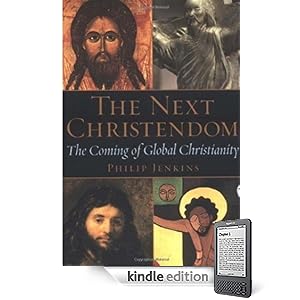
The Next Christendom: The Coming of Global Christianity bu Philip Jenkins, via AmazonThe Amazon Kindle application has been both good and bad. Good in the respect that it is no more complicated to read there than it would be in a browser. Bad in that I’ve really had to figure out what electronic texts actually work best from the vantage point of the Kindle application/service. For example, I’ve got handle on looking at Kindle for reference books, but for the longer-form non-fiction reads (currently reading Philip Jenkins’s The Next Christendom: The Coming of Global Christianity), I am up and down about purchasing them via Kindle. These are the kinds of books that normally I’ll reference and/or lend out, and there just aren’t enough people around me with a Kindle or lendable electronic book platform to do this with.

Collaborating and (Nearly) Creating

One of the experiments that seems to be going ok in some areas, and not so well in others is this idea of using the iPad as a collaborative platform. In this respect, I am using my iPad for several projects that I/MMM am working on.

For one project, I am using the iPad as a project management and research assistant. To this end, I’m learning how to use GoodReader, Evernote, Dropbox, and Google Docs in a synchronous relationship. GoodReader and DropBox help me deal with issues of file transfer and managing paperless PDFs (yea for that). Evernote plays the role of a notepad and really comes close to what I think a document management app should look like for the iPad. What it is missing in terms of collaboration, Google Docs takes up – though I’m more just in a reading mode with all but the spreadsheets end of things for now.

For another project, I’ve been using the iPad for speaker/presenter notes, and soon will be using it more in concert with my mobile to do the entire presentation.

The Social Networking Secretary

Part of making sure that MMM is abreast of data and opportunity means staying attuned to a few social networking sites. There’s the Twitter client on mine to handle that aspect, and then I use websites to handle the rest. What is neat is that I now have this flow where I get a notification on my mobile about something (LinkedIn/Twitter add, etc.) and if I am resting, I don’t pick up the phone to see what it is, I just move over to that section on the iPad and look at it there.

At the same time, there’s notable fatigue that I get in using social networks on the iPad, so I’m never there very long before moving off those apps/sites and onto something a bit better. Flipboard has been a revelation (I could see a picture bible using this format) and has really helped me to look into other topics that will eventually be areas that mobile ministry efforts will have to address.

Digging in the Word

In respect to the Bible, I have mostly stuck with YouVersion. Mainly because I’ve not had a need to do any in-depth studies, and also that the general interface of YouVersion works well when I’m sharing the reading with other people. I only use a few translations when doing readings, and connectivity doesn’t matter as much (yea, I need to share more notes and bookmarks, I’ll get there).

I have recently downloaded Logos’s Bible Reader for iPad. Am a lot late in checking it out, but I needed to know why I’d need to look at another Bible reader and a moment came up where I needed more. I needed to do some contextual lookups of a statement made by a minor prophet and this wasn’t possible in the other Bible reader. Therefore, I’m in the midst of checking out Logos. I’ll have some fuller impressions in a few weeks, but so far, I like how well its tuned to studying the text – besides just reading. But, if you choose to read, the way in which the UI gets out of the way is awesome.

I’d still like to see something like an Evernote-plugin that could take my notes from Evernote and link them to a Bible reader/service. I write a lot of reflections, and being able to start at the reference, and then link into the application would be something very innovative. I get that we use the same behavioral metaphors for digital bibles, but they aren’t yet taking advantage of the digital paradigm enough for me.

Evangelism’s Weird Leanings

The iPad is weird. I’ve entertained two very different sides of discussions since having one. There is the side of people who see it as a magical device – they are impressed at how easy it is to use and how hard normal PCs look and act like after playing with it. To these folks, it causes conflicting thoughts as well, because as the iPad is neat, some have admitted that it makes computer technology seem even more idolatrous than ever before (touching the digital versus having a layer between you and digital with the traditional paradigm).

The other side of conversations have been those people who see the iPad (and its iPhone forbearer) as primarily a Western/developed-nation experience. This is true to some degree, but the larger picture is being missed. The iPad, as with smartphones before, are a technology that doesn’t need legacy computer leanings to find relevance. The speed at which the world has moved to touch-gesture interfaces as normal versus one-off is something being felt everywhere. No, we don’t have iPads (yet) in the price range that makes this accessible, but we do have the need to have content on those iPads disrupting industries such that we are seeing this trickle down and across to other technologies.
Evernote on the iPad and N8 - Is Local Storage Needed
In both cases, there’s this pull to at least see what’s possible. Most people see this space as something that won’t last long (and it might not). But there’s a challenge to the way things had been done, and a reluctance on my part to want to go back to the way things were. Certain types of friction aren’t needed, and with the iPad, doing computing easier seems to speak to people differently than even using my mobile has.

Having the iPad has in a sense turned me more into a person that pays attention to the implications of mobile and connected technologies and how we are sending and receiving Christ in these changing times. Surely, not everything will be answerable, but as we all use these more, we come up to challenges and work through them with the hope that what we learn will filter into ways that we can enable the Body to take advantage of these tools.

At least, that’s how I look at using this tech. I’ve got a lot of learning to go.

Info-Graphics and Visualizing Mobile Contextually

This past summer saw MMM participating in several conversations and sessions around opportunities and issues for mobile developers (with WIP Connector). More often than not, its isn’t the clearest of pictures for development when you start diving into niche arenas such as religious content. The market is indeed different, and the challenges can be pretty looming. Nevertheless, there are some consistent themes, especially in terms of getting apps to market and monetization.

This graphic, produced by Vision Mobile, makes it pretty clear the prospects for developers on the major mobile platforms. Especially as it relates to mobile software in the religious domain, paying attention to the installed base of users is just as important as just getting something developed – and you don’t want to spin your wheels learning how to develop for every platform.

The Mobile Developer Journey

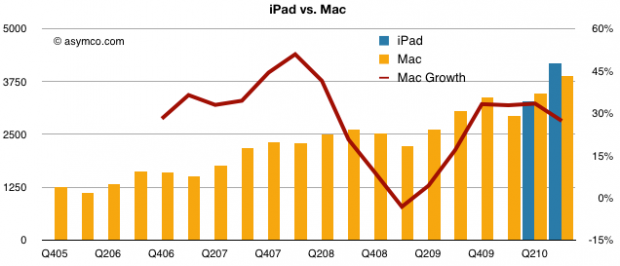
Another site that offers several info-graphics towards understanding opportunities within mobile can be found at Asymco. Asymco has a ton of data and usually packs in some solid commentary around his methodologies used. Here’s one graphic that some in the Bible software industry might find interesting:
Info-Graphic: Visualizing iPad vs Mac, via Asycmo
Graphic from Visualizing iPad vs Mac, via Asycmo

Now, you can find info-graphics on a ton of areas within mobile, but you will want to make sure that you are viewing it through the appropriate lens. The data shown in this post is great, but you will need to combine it with data on (world/local) religions, tech adoption (economics), and probably media (text/publishing, audio/music, and video) in order for it to make the most sense contextually.

Cape Town 2010/Charlotte Global Sites Update

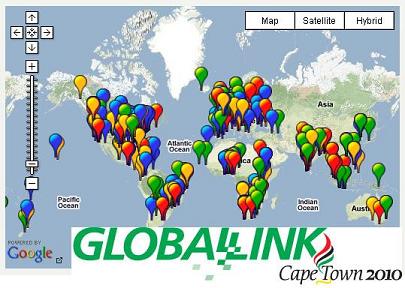
Google Map image of Global Link sites participating with the 3rd Lausanne Evangelical Congress 2010Got some timely (really) updates for you concerning the after-sessions happening in Charlotte related to the 2010 Lausanne Congress. Here are the details:

The Park Church
The Park Church (6029 Beatties Ford Road) will be having sessions November 4th and 18th, and again on December 2nd; starting at 6:30pm (all three days). They will show selected video footage from the conference, then allow those present to break into smaller groups for dialogue on selected questions. Bishop Alexander, who personally attended the conference, will set the framework for each video, and the format we will use for discussion.

Dr. Celestin Musekura of Rwanda, via Beautiful FeetAntioch Baptist Church
Antioch Baptist Church (232 Skyland Avenue) will be having a session Thursday, November 11 from 11:30am to 12:30pm, with Dr. Celestin Musekura speaking on reconciliation.

Carmel Baptist Church
Carmel Baptist Church (1145 Pineville-Matthews Rd.) will be having its session the afternoon of November 21st from 4-7pm. The afternoon is divided into segments where the Globalink service and testimonies from attendees will offer a sampling of the Cape Town Congress experience.

As new events in and around Charlotte are added, we’ll be sure to let you know (primarily via Twitter). If you are part of the MMM audience outside of the Charlotte area, and are in knowledge of or conducting a Global Link session, send us a Google Calendar invite (mobileministrymagazine at gmail) so that we can note that on our public calendar and assist with any publication of this event meant to keep the Body connected to one another for the glory of our Lord.

For more information about the 3rd Lausanne Congress, connect via their websiteTwitter, and Facebook.

Carnival of the Mobilists #242 at Blog.AntoineRJWright

Carnival of the Mobilists (logo)It is always a good thing when the Carnival of the Mobilists (CoM) is published. A collection of the past week’s writings on mobile, the CoM is a chance to spread some of the wealth of thought and application occurring in the mobile space.

This week’s CoM is hosted over at Blog.AntoineRJWright and features pieces on recent stats, user interface/experience with tablets, and several things happening with platforms and carriers.

There’s always room for new contributors – so if you are doing anything related to mobile ministry, here’s a platform to get the word out about another influential area of mobile. Read the submission details and post schedule over at the Carnival of the Mobilists website.

Movirtu: Access Isn’t a Limitation But an Opportunity

Nokia 1100 via MMMStories like this I like. CNN Labs recently interviewed Nigel Waller of Movirtu on their premise of creating and releasing a $5 mobile phone that is activated for only “10 or 20 cents”.

Their target is the 1-3 billion people in the world who can’t afford access to mobile communication devices and services because even at their cheapest, they are still nearly a year’s salary for many. And so, Movirtu designed their service model around the opportunity that could be found in granting access. A flip of the way we normally think, but totally meeting communities where they are.

So much about mobile is about granting access. And many projects meet their stopping points where finances and resources come in. But, if like Movirtu, we can activate some of those creative energies, how do we then turn gaps like access into opportunities – especially in the case of mobile/web where something fruitful is really just a flip of the bit away?

Mobility in the Midwest – If You Build It, They Will Come

There are two parts of Kansas: the east and the west. The east in more populated and therefore has met and embraced the 21st Century. The west part of Kansas, is different. It is easy to suggest many of the things I have experienced personally in a more rapidly moving community, yet the reality is that those are just not going to happen yet. I have been to churches that have websites with services available on iTunes the next day. With over 20 churches in a population of 40,000, there is a exactly 1 church that has embraced this technology. I have been in churches that livestream services for people who are maybe home bound, or who maybe across country that service. There is no church that provides these services yet.

I have not counted all the churches here, but like I said just where I live there is a population of 40,000 and only a handful of churches have a web site. Five churches have a Facebook page and no one here is heard of Twitter. I mentioned my Twitter account in passing this week and someone passed my a tissue.

What can be done to close this gap between the east and west? The phrase keeps coming to mind “build it and they will come”. I didn’t coin it but I will explain what I mean.

I have had so much interest just in my every day life, keeping my schedules on my phone thereby eliminating the need for extra paper in my wallet. Online storage of my photos so that if and when my hard drive dies, I have back up of those precious moments. These are valuable, tangible services friends have seen and implemented in their own lives that they didn’t know existed. I am in the process of building a web site for the church I attend. I want to expand the services that will be on that web site, but just having a web presence is a nice start.

I’ve wondered if my presence in the plains is for the better and I have to believe it is. Bringing useful technology to people isn’t a easy process, but it is a satisfying one. I feel optimistic that “if you build it, they will come” philosophy will pay off.

Editor Note: Mobility in the Midwest is a weekly series looking at some of the mobile technology challenges presented in the Midwest US, and what the transition to mobile and connected communications means towards these communities.